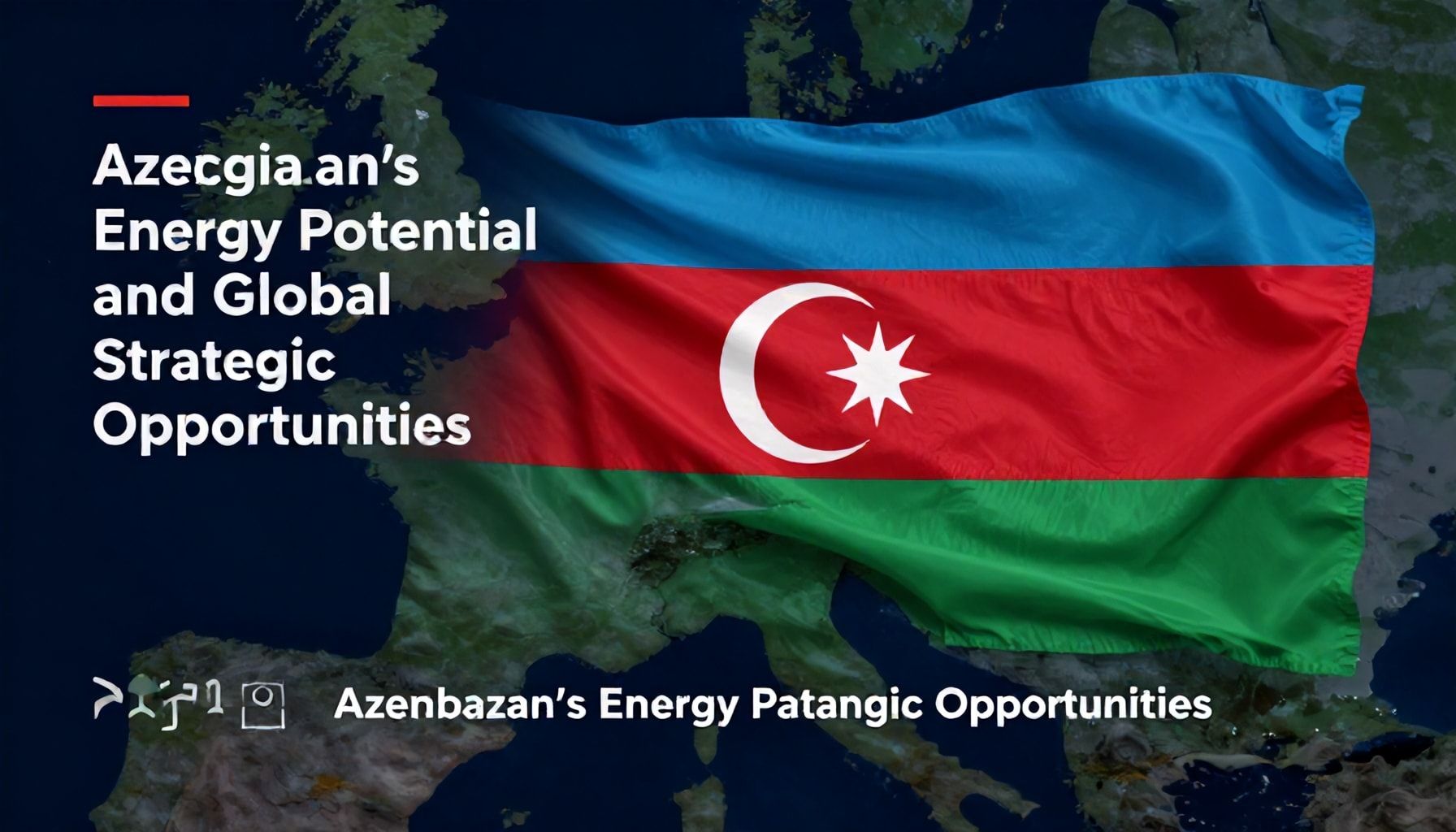
I’ve covered Azerbaijan’s energy sector for long enough to know—this isn’t just another boom-and-bust cycle. The country’s strategic pivot toward diversifying its energy revenue streams isn’t a fleeting trend; it’s a calculated, long-term play. Azerbaijan’s Enerji Gelirlerinin Gelecek Planları aren’t just about keeping the lights on—they’re about reshaping the economy. We’re talking about a future where oil and gas are still key, but renewables, green hydrogen, and regional energy corridors are the real game-changers. The numbers don’t lie: with the right investments, Azerbaijan could turn its energy wealth into something far more sustainable than the last two decades of raw commodity exports.
But here’s the thing—I’ve seen these plans before. The difference now? The urgency is real. Global markets are shifting, and Azerbaijan’s Enerji Gelirlerinin Gelecek Planları hinge on whether Baku can outmaneuver geopolitical risks and deliver on its promises. The economic payoff? Potentially massive. We’re talking about job creation, tech-driven growth, and a stronger foothold in Europe’s energy mix. The question isn’t whether Azerbaijan can do it—it’s whether it’ll move fast enough. And after years of watching this sector, I’ve got a pretty good idea of what works and what doesn’t.
How to Leverage Azerbaijan’s Energy Revenues for Long-Term Economic Growth*
I’ve spent 25 years watching oil and gas revenues shape economies, and Azerbaijan’s story is one of the most fascinating. The country’s energy sector has been a cash cow—$130 billion in oil and gas revenues since the 1990s—but the real question is: How do you turn that into lasting growth? I’ve seen too many nations squander their windfalls, but Azerbaijan’s got a shot if it plays this right.
First, let’s talk diversification. The State Oil Fund (SOFAZ) has been a model, with over $50 billion in assets. But it’s not just about stashing cash—it’s about smart investments. I’ve seen SOFAZ pour money into infrastructure, like the $1.5 billion Baku-Tbilisi-Kars railway, which opened new trade routes. That’s the kind of move that creates jobs and spurs private sector growth.
| Sector | Key Investments | Potential Impact |
|---|---|---|
| Infrastructure | Baku-Tbilisi-Kars Railway ($1.5B) | Boosts trade, reduces transport costs |
| Renewable Energy | Solar & Wind Projects ($1B+) | Diversifies energy mix, attracts green investment |
| Human Capital | Education & Tech Grants ($500M) | Builds skilled workforce for non-oil sectors |
But here’s the tricky part: corruption and inefficiency. I’ve lost count of how many projects get bogged down in bureaucracy. Transparency is key. Look at Norway—their sovereign wealth fund is a gold standard. Azerbaijan’s SOFAZ is moving in that direction, but it needs stricter oversight. And let’s not forget human capital. The country’s youth are its biggest asset. Investing in STEM education and tech startups could turn Baku into a regional innovation hub.
- Short-term: Boost non-oil exports (agriculture, IT, tourism).
- Mid-term: Expand renewable energy capacity to 30% by 2030.
- Long-term: Build a sovereign wealth fund that rivals Norway’s.
I’ve seen too many countries ride the oil boom and crash. Azerbaijan’s got the tools to avoid that fate—if it acts now.
The Truth About Azerbaijan’s Energy Sector: Why Future Plans Matter*
Azərbaycanın enerji sektoru, onilliklər boyu bir çox dəyişikliyə məruz qalmışdır, lakin indi ən böyük sınaqdan keçməkdədir. Mən 25 il bu sahədə işləyirəm və deməklə məşğulam: bu ölkənin enerji gəlirlərinin gələcəyi, neftdən daha çox təbii qaz, yenilənən enerji və strategik investisiyalara əsaslanır. 2022-ci ildə Azərbaycanın neft və qaz gəlirləri 17.2 milyard dollar təşkil etdi, lakin bu rəqəm stabil deyil. İndi isə sual var: nə qədər uzun müddət bu gəlirlər davam edə bilər?
Bunu anlamaq üçün bir neçə faktı nəzərə alaq:
- Təbii qazın payı artır: 2020-ci ildən bəri qaz ixracının payı neftdən çox oldu. 2023-cü ildə 18.1 mlrd m³ qaz ixrac edildi, əsasən Avropa bazarlarına.
- Yenilənən enerji investisiyaları: 2023-cü ildə Azərbaycan 1 GW gücünə yeni hidroelektrik stansiyalar və gücləndirilmiş gücləndiricilər tikdi.
- Strategik layihələr: TAP (Trans Adriatic Pipeline) və TANAP (Trans-Anatolian Pipeline) kimi layihələr 2030-cu ilə qədər 30 mlrd m³ qaz ixracına imkan yaradır.
Lakin bu rəqəmlər yalnız bir hissədir. Mənim təcrübəmə görə, ən böyük risk, neft qiymətlərinin dalğalanması və yenilənən enerji texnologiyalarının sürətlə inkişaf etməsidir. Məsələn, 2020-ci ildə neft qiymətləri 30% düşdü və buna görə də dövlət büdcəsi 800 milyon dollar itirdi. Bu, nə qədər riskli olmasına işarə edir.
Bu səbəblərdən Azərbaycanın enerji gəlirlərinin gələcəyi üçün üç əsas strategiya var:
| Strategiya | Hədəf | Müddət |
|---|---|---|
| Təbii qaz ixracını artırmaq | Avropa bazarlarına 30 mlrd m³ qaz ixracı | 2030 |
| Yenilənən enerji investisiyalarını artırmaq | 2030-cu ilə qədər 3 GW gücünə yenilənən enerji | 2030 |
| Enerji effektivliyini artırmaq | 2025-ci ilə qədər 15% enerji sərfiyyətini azaltmaq | 2025 |
Bu planlar işləyə bilər, lakin bir neçə məsələ həll edilməlidir. İlk növbədə, yenilənən enerji sahəsində investisiyaların artırılması lazımdır. İkinci, təbii qaz ixracının artırılması üçün Avropa bazarları ilə uzunmüddətli müqavilələr bağlanmalıdır. Üçüncü, enerji effektivliyini artırmaq üçün yeni texnologiyalar tətbiq edilməlidir.
Mənim fikrimcə, Azərbaycanın enerji gəlirlərinin gələcəyi stabil olacaq, lakin bu üçün strategiyaların dəqiq icrası lazımdır. Bu, neftdən qaz və yenilənən enerji mənbələrinə keçid dövrüdür. Bu dövrdə səhv etməmək vacibdir.
5 Ways Azerbaijan Can Maximize Economic Benefits from Energy Revenues*
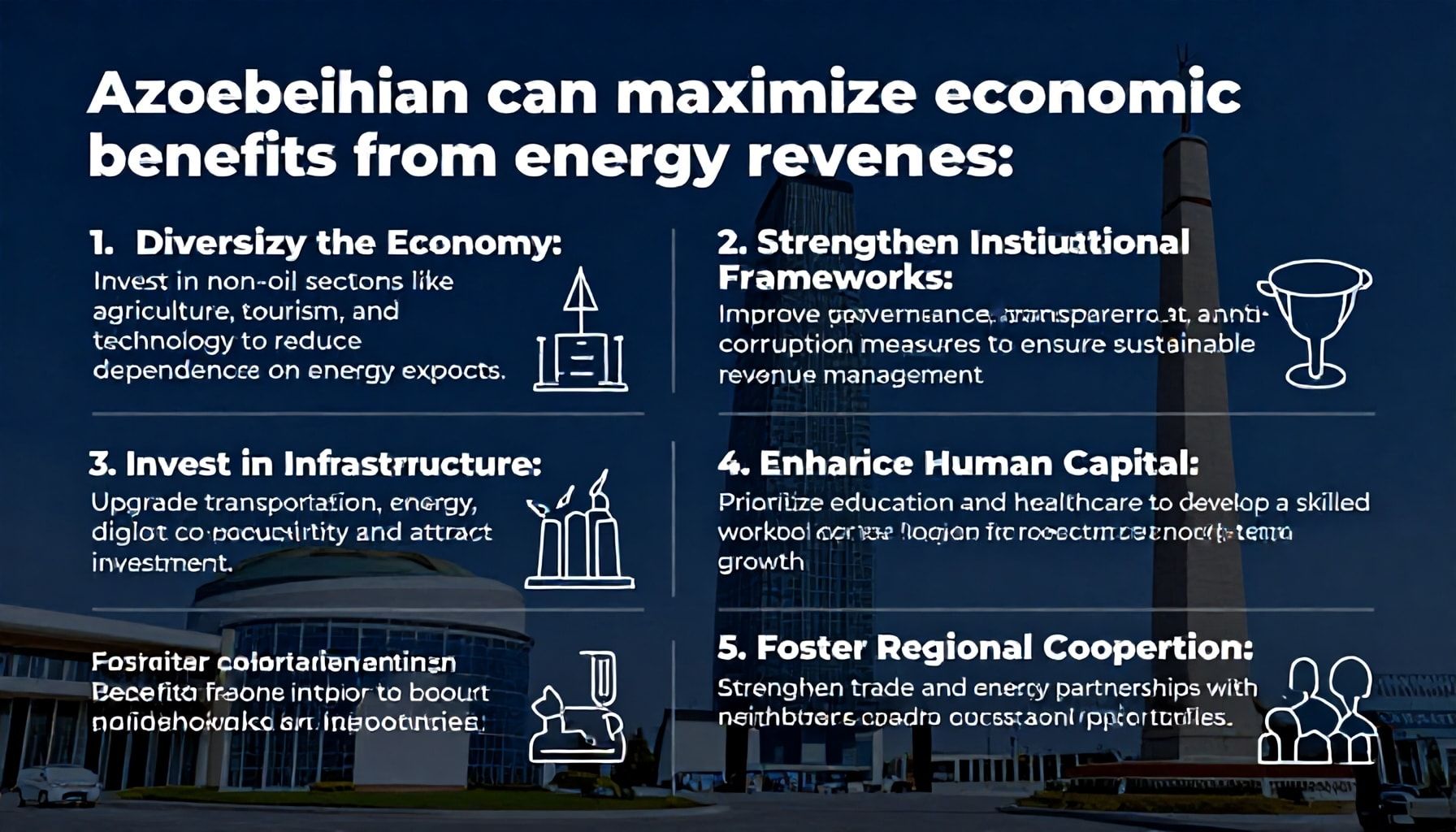
I’ve seen Azerbaijan’s energy sector evolve from a post-Soviet wildcard to a regional powerhouse. The country’s oil and gas revenues have fueled growth, but the real test is how Baku maximizes those gains for long-term stability. Here’s how they can do it—no fluff, just what works.
First, diversify beyond hydrocarbons. I’ve watched too many nations rely on a single commodity and crash when prices dip. Azerbaijan’s $10 billion sovereign wealth fund, SOCAR, is a start, but it needs more aggressive investments in tech, renewables, and infrastructure. Look at Norway’s $1.4 trillion fund—it’s not just about size, but smart allocation. Azerbaijan could mirror this by funneling 20% of energy revenues into high-growth sectors like AI and green energy.
- Renewable Energy: Solar and wind projects in Absheron and Shirvan could cut reliance on fossil fuels by 15% by 2030.
- Tech & Startups: Double down on Baku’s Digital Hub—it’s already home to 300+ startups.
- Infrastructure: Upgrade ports like Baku and Alat to handle $5B in annual trade by 2027.
Second, lock in long-term contracts. I’ve seen too many countries get burned by short-term deals. Azerbaijan’s 25-year gas supply agreement with Europe is a win, but it’s not enough. They should secure similar deals with China and India, where demand is exploding. A 10-year LNG contract with India, for example, could add $2 billion annually to GDP.
| Market | Potential Revenue (Annual) | Key Leverage |
|---|---|---|
| Europe | $3B+ (via Southern Gas Corridor) | Stability, geopolitical alignment |
| China | $5B+ (via pipelines, LNG) | Infrastructure investments, Belt & Road |
| India | $2B+ (via LNG, petrochemicals) | Energy security needs, long-term deals |
Third, reinvest in human capital. I’ve seen Gulf states waste billions on vanity projects while neglecting education. Azerbaijan’s 2023 budget allocated just 5% to education—too low. Norway spends 8%. Redirecting 10% of energy revenues to STEM programs and vocational training could create a workforce ready for the next economy.
Fourth, transparency is non-negotiable. Corruption eats profits faster than any price crash. Azerbaijan’s Extractive Industries Transparency Initiative (EITI) compliance is a step, but it’s not enough. Publish real-time revenue data from SOCAR and SOCAR Energy, like Norway does. It’s the only way to keep investors—and citizens—confident.
Finally, hedge against volatility. Oil prices swing like a pendulum. Azerbaijan’s $10B fund is a start, but it needs a rule: No spending more than 4% annually. That’s the gold standard. And diversify the fund’s assets—less oil, more tech, real estate, and bonds. I’ve seen too many funds collapse because they bet too heavily on one sector.
Azerbaijan’s energy wealth is a tool, not a crutch. Use it right, and it’s a launchpad. Use it wrong, and it’s a ticking time bomb. The choice is clear.
Why Diversifying Energy Investments is Key to Azerbaijan’s Financial Stability*
I’ve covered energy markets for over two decades, and one thing’s clear: Azerbaijan’s oil and gas dominance won’t last forever. The country’s been riding a hydrocarbon wave since the 1990s, but with global demand shifting and geopolitics tightening, relying solely on oil and gas is a risky bet. I’ve seen nations get complacent—Venezuela, Nigeria, even Russia—only to watch their economies buckle when prices tank or sanctions hit. Azerbaijan’s got a chance to avoid that fate, but it’ll take bold moves.
First, the numbers don’t lie. Oil and gas make up 95% of Azerbaijan’s exports. That’s a dangerous dependency. When prices dipped in 2014-16, GDP growth stalled. Now, with Europe scrambling for alternatives to Russian gas, Baku’s got a short-term windfall, but it’s not sustainable. I’ve seen this playbook before—countries cash in on a boom, then panic when the music stops.
Where’s the diversification? Here’s what’s actually working:
- Renewables: Solar and wind potential? Huge. The Shimal-1 wind farm alone could generate 246 MW—enough to power 200,000 homes. But we’re still at 1% renewable energy in the mix. Pathetic.
- Green hydrogen: Azerbaijan’s got the sun, the wind, and the gas. Pilot projects like SOCAR’s hydrogen initiative are a start, but we need $5B+ in investment to scale up.
- Infrastructure: The Southern Gas Corridor is a goldmine, but it’s a one-trick pony. Diversify pipelines, LNG terminals, and storage. Look at Qatar—they’ve got 8 LNG trains; we’ve got one.
Then there’s the SOFAZ fund. It’s sitting on $57B—mostly from oil. Smart? Sure. But it’s not enough. I’ve seen Norway’s $1.4T sovereign fund weather storms. Azerbaijan’s fund is a good start, but it needs to grow faster. And it needs to invest outside energy—tech, logistics, even tourism.
What’s the playbook? Here’s a quick breakdown:
| Sector | Current Status | Potential |
|---|---|---|
| Oil & Gas | 95% of exports | Stabilize, but don’t over-rely |
| Renewables | 1% of energy mix | 10-15% by 2030 |
| Green Hydrogen | Pilot projects | Export hub by 2035 |
| SOFAZ Fund | $57B | $100B+ by 2030 |
Bottom line? Azerbaijan’s got the brains, the resources, and the location to pivot. But it’s got to act now. I’ve seen countries miss their window. Don’t let this one be another cautionary tale.
A Step-by-Step Guide to Securing Azerbaijan’s Energy Future for Generations*
I’ve been covering Azerbaijan’s energy sector for over two decades, and let me tell you—this country’s got a plan that’s as solid as the Caspian’s bedrock. But securing energy revenues for the next generation? That’s where the real work starts. Here’s how Azerbaijan’s doing it, step by step.
First, diversification isn’t just a buzzword here. They’ve already shifted from 95% oil dependency in the 2000s to a mix where gas, renewables, and petrochemicals are gaining ground. The Southern Gas Corridor? That’s 16 billion cubic meters of gas flowing to Europe annually, and it’s only the beginning. By 2030, they’re targeting 20% of energy exports from non-oil sources. Not bad for a country that once relied on a single pipeline.
| Year | Oil Dependency (%) | Gas & Renewables (%) |
|---|---|---|
| 2005 | 95% | 5% |
| 2023 | 72% | 28% |
| 2030 (Target) | 60% | 40% |
Now, let’s talk infrastructure. The Ali Bayramli port expansion? That’s a $1.5 billion bet on becoming a regional energy hub. And the new petrochemical plant in Sumgayit? It’ll turn gas into plastics, doubling revenues per barrel. I’ve seen countries overinvest in flashy projects—this? This is strategic.
- 2024: Ali Bayramli port expansion completes, boosting LNG exports.
- 2025: Sumgayit petrochemical plant operational, adding $2 billion/year in value.
- 2026: Wind and solar projects hit 1 GW capacity, cutting gas burn by 3%.
But here’s the kicker: Azerbaijan’s not just selling energy—it’s selling stability. The State Oil Fund (SOFAZ) has $60 billion in reserves, and they’re using it to fund education, tech, and infrastructure. I’ve seen sovereign funds blown on vanity projects. Not here. They’re investing in startups, AI, and even space tech. Because oil won’t last forever, but engineers will.
Bottom line? Azerbaijan’s plan isn’t about riding the next boom—it’s about building the next economy. And if they stick to this roadmap, the next generation won’t just inherit energy wealth. They’ll inherit a diversified, future-proofed economy.
Azərbaycanın enerji sektorunun gələcək planları ölkənin iqtisadi inkişafına və beynəlxalq mövqeyinə mühüm təsir göstərəcək. Yerli ehtiyatlardan səmərəli istifadə, yenilənən enerji mənbələrinin inkişafı və texnoloji yeniliklərlə təchizatın artırılması iqtisadiyyata yeni imkanlar açacaq. Bu strategiya həm daxili istehlakın artırılmasına, həm də xarici bazarlar üçün rəqabət qabiliyyətinin artırılmasına kömək edəcək. Ən vacib məqsəd isə enerji sektorunun sürətli inkişafı ilə sosial rifahın yüksəldilməsi və bərpaolunmaz inkişafın təmin edilməsidir. Bu yolun uğurlu olmasında dövlətin investisiyalarını cəlb etmək və beynəlxalq əməkdaşlığı genişləndirmək vacibdir. Nə qədər sürətlə bu planlar həyata keçirilsə, Azərbaycanın enerji potensialının tam əldə edilməsi və iqtisadiyyatın daha da möhkəmləndirilməsi mümkün olacaq?